
Leak Detection in Sea Point
24/7 CALL-OUTS
Hidden leaks can damage apartments, ceilings, walls, cupboards, floors and neighbouring units before the source becomes obvious. Smart Plumbing provides leak detection services in Sea Point for apartments, sectional title buildings, rental properties, homes, offices, shops and commercial premises.
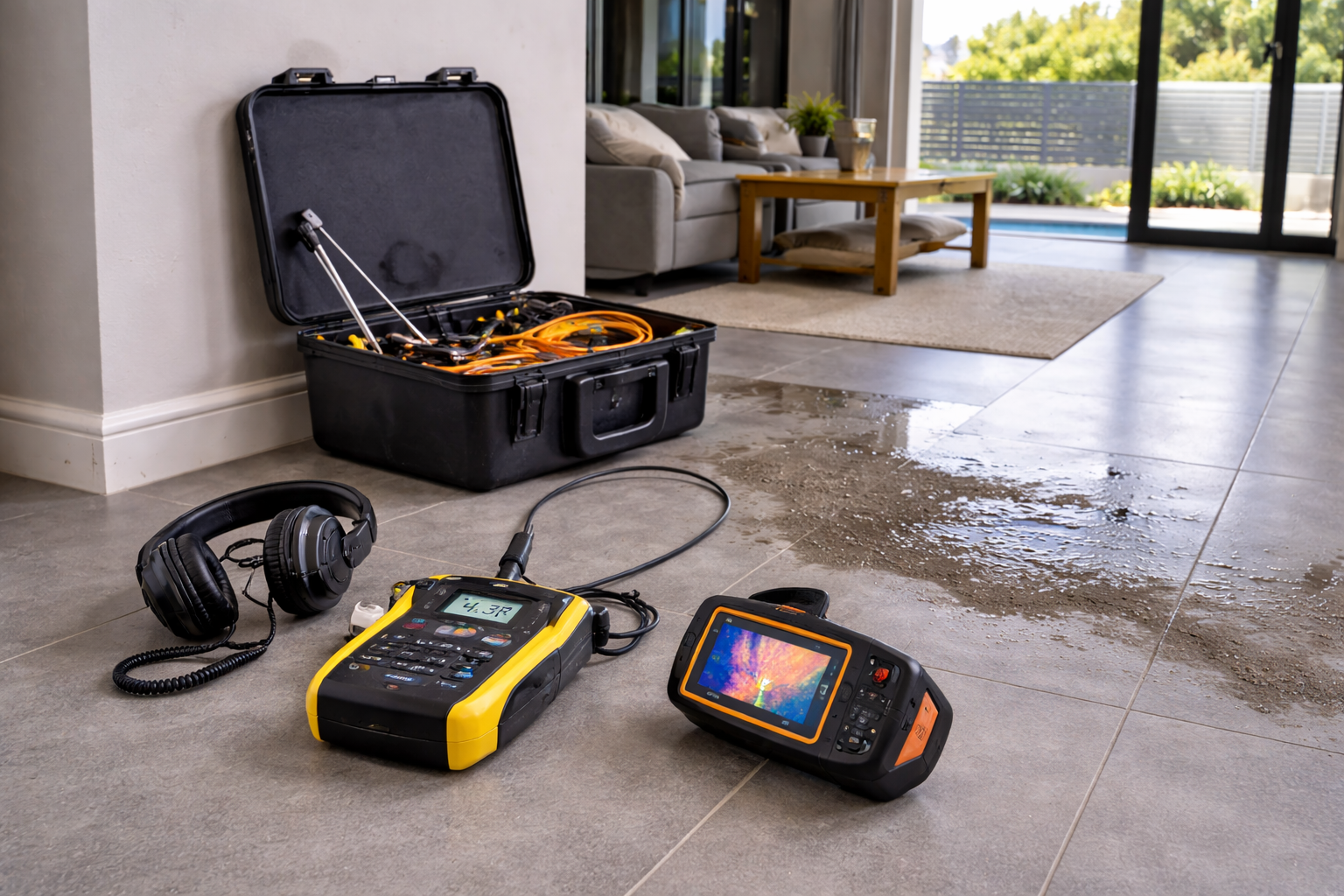
Leak Detection Services in Sea Point
A hidden water leak can be difficult to trace, especially in apartment blocks and older buildings where pipework may run through ceilings, shared walls, service ducts, cupboards, bathrooms, kitchens and common areas. Water may appear in one place while the actual leak starts somewhere else entirely.
Smart Plumbing assists with leak detection in Sea Point where the source of dampness, water damage or unexplained water loss is not immediately clear.
The signs may include damp walls, ceiling stains, bubbling paint, swollen cupboards, mouldy smells, low water pressure, wet flooring, a water meter that keeps moving, warm floor patches, high water bills, or water dripping into another unit.
Sea Point has many apartment buildings, sectional title schemes, renovated flats, older blocks, short-term rentals, guest accommodation, offices, restaurants, cafés, retail spaces and mixed-use properties. Leak detection in this area often needs careful diagnosis because water may travel through concrete slabs, service shafts, wall cavities, ceilings and shared plumbing areas before it becomes visible.
A small hidden leak can quickly become a bigger issue if it affects a neighbour, a tenant, a guest, a body corporate area or a commercial space. Finding the source early helps reduce unnecessary breaking, water damage, neighbour disputes, tenant complaints and repeat repairs.
Request a Plumber
Signs You May Have a Hidden Water Leak
A hidden leak does not always begin with visible running water. It may start with a faint damp smell, a stain that slowly grows, paint that begins to bubble, a cupboard that swells, or a water bill that looks higher than normal.
Common signs include damp walls, ceiling marks, mould growth, peeling paint, wet skirting, lifted flooring, musty smells, low pressure, water sounds when taps are closed, warm patches on the floor, wet cupboards, water dripping from above, or a water meter that continues moving when no water is being used.
In Sea Point apartments, leak signs can be confusing because the water may not appear inside the unit where the leak started. A ceiling stain in one apartment may come from the unit above. Dampness in a passage may be linked to a geyser, bathroom pipe, shared service duct or concealed plumbing line. A wet wall may be caused by a pipe inside the wall, a shower mixer, a toilet connection, a leaking basin pipe or a building plumbing route.
Because water damage can look similar from the outside, proper leak detection helps separate plumbing leaks from other possible causes before walls, ceilings, cupboards or floors are opened.
Ceiling Leak Detection in Apartments and Buildings
Ceiling leaks are especially stressful in apartments and multi-storey buildings because they often involve more than one property. Water may drip into a unit below, damage a ceiling board, affect a light fitting, spread into cupboards or create stains in a passage or bedroom.
In Sea Point buildings, ceiling leaks may be caused by a leaking geyser, burst pipe, bathroom leak from the unit above, faulty toilet connection, shower waste issue, pipe joint inside a ceiling void, or water escaping from a service duct. The visible drip is usually not enough to confirm the source because water can travel across slabs, beams, insulation and ceiling spaces before appearing below.
Smart Plumbing assists with leak detection where there are ceiling stains, dripping water, damp marks, sagging ceiling boards or moisture near light fittings. The first priority is to identify whether the issue is plumbing-related and where the water is most likely coming from.
If water is dripping near electrical points, light fittings or switches, the area should be treated carefully. The plumbing fault should be checked before painting, plastering or ceiling repairs begin, otherwise the same damage may return.
Request a Plumber
Wall Leak Detection and Damp Patches
Leaks inside walls can cause damage slowly before the source is visible. A wall leak may show as bubbling paint, damp plaster, loose tiles, swelling skirting, dark marks, mouldy smells or dampness that keeps returning after cleaning or drying.
In Sea Point apartments, wall leaks can be difficult because pipes may run through shared walls, bathroom walls, kitchen walls, service ducts or older pipe routes that are not easy to see. A damp wall in one room may be caused by a bathroom pipe on the other side. A wet patch near a kitchen or bathroom may come from a concealed water line, waste pipe, geyser pipe, toilet connector or shower mixer.
Older buildings and renovated flats can make leak tracing more complicated because pipe routes may have changed over time. Old and new plumbing may connect behind cupboards, tiles, walls or ceilings. A previous repair may also hide weak pipework that starts leaking again nearby.
Smart Plumbing assists with identifying likely wall leak sources so repairs can be targeted more accurately. This helps avoid unnecessary breaking and reduces the risk of patching the wrong area.
Bathroom Leak Detection in Sea Point
Bathrooms are one of the most common places for hidden leaks because they contain several water and waste connections in a compact space. A leak may come from a shower mixer, toilet connector, basin pipe, bath waste, shower drain, concealed wall pipe, trap, valve or pipe joint behind tiles.
In Sea Point apartments, a bathroom leak can affect the unit below, the room next door or a shared wall. A tenant or owner may notice water outside the shower, dampness near the toilet, bubbling paint behind a basin, wet skirting in a bedroom, mouldy smells in a cupboard or a ceiling stain in the apartment below.
Not every bathroom leak is caused by the same issue. Water on the bathroom floor may be from a leaking toilet connection, a failed shower drain, a concealed pipe leak, a basin trap, a loose fitting or a blocked waste line causing water to back up. A damp wall outside the bathroom may be caused by pipework behind the tiles rather than surface water from the shower.
Smart Plumbing assists with bathroom leak detection by checking the likely plumbing sources and narrowing down the cause before repairs are carried out.
Request a Plumber
Kitchen, Scullery and Appliance Leak Detection
Kitchen and appliance leaks can damage cupboards, floors, walls and nearby rooms before the leak becomes obvious. Water may collect under the sink, behind a cupboard, near a dishwasher, around a washing machine point, under flooring or inside a wall.
In Sea Point apartments and rental units, kitchen leaks often go unnoticed until cupboards start swelling, flooring lifts, mould appears or water begins affecting the unit below. A small drip from a pipe connection, trap, shut-off valve, tap connector or appliance hose can cause slow damage over time.
Smart Plumbing assists with leak detection around kitchen sinks, sculleries, washing machine points, dishwasher connections, shut-off valves, taps, traps and concealed kitchen pipework. The source needs to be checked carefully because a wet cupboard may be caused by a supply pipe, waste pipe, appliance hose, trap, sink seal or valve.
For rental properties, guest accommodation and managed apartments, kitchen leaks should be handled early because damaged cupboards and flooring can become expensive to repair once moisture has spread.
Geyser Leaks and Overflow Problems
Geyser leaks are common in apartment-heavy areas because geysers are often installed in cupboards, ceiling voids, service ducts, compact utility areas or shared access spaces. When something goes wrong, the water may appear far away from the geyser itself.
In Sea Point, geyser-related leaks may show as ceiling stains, damp cupboards, dripping water, an overflow pipe running constantly, loss of hot water, water in a drip tray, a complaint from the unit below, or dampness around a service area.
Smart Plumbing assists with identifying geyser-related leaks and checking whether the issue comes from the geyser cylinder, pressure control valve, temperature and pressure valve, vacuum breaker, overflow pipe, pipe connection, shut-off valve or nearby plumbing.
If the geyser cylinder is still in good condition, a valve or pipe repair may solve the issue. If the cylinder has burst, corroded or started leaking from the body, replacement may be needed. The surrounding plumbing should also be checked so a pressure or overflow problem does not cause repeat damage after the repair.
Request a Plumber
Underground and Outside Water Leaks
Not all Sea Point leaks happen inside apartments or buildings. Some leaks occur outside, below paving, near the water meter, under a courtyard, along a boundary line, in a parking area, under a driveway or along the main supply line into the property.
An underground or outside leak may show as paving that stays damp, water pooling near the meter, low pressure throughout the property, a hissing sound outside, soft ground, wet patches near walls or a water meter that keeps moving while no taps are open.
In older buildings, guest houses, commercial properties and apartment blocks, outside water leaks can be hard to isolate because there may be shared lines, multiple units, common areas, garden taps, meter rooms or service routes. Finding the source properly helps avoid unnecessary digging and makes it easier to repair the damaged section.
Smart Plumbing assists with investigating underground and outside water leaks in Sea Point so the affected pipework can be repaired as practically as possible.
High Water Bills and Water Meter Movement
A high water bill is often one of the clearest signs of a hidden leak. If water usage has not changed but the bill suddenly increases, there may be water escaping from a pipe, toilet, valve, geyser connection, underground line or concealed plumbing point.
A useful check is the water meter. When all taps, toilets, appliances, irrigation points and water-using fixtures are off, the meter should not continue moving. If it does, a leak may be active somewhere on the property.
In Sea Point apartments, sectional title buildings and commercial properties, high water usage can be harder to understand because several people may use the plumbing. A tenant may not notice a running toilet. A guest may not report a small leak. A business may not realise water is being lost after hours. A building may have shared lines or multiple points that make the source harder to isolate.
Leak detection helps move the situation away from guesswork. Once the source is narrowed down, the correct repair can be carried out instead of replacing random fittings and hoping the water bill improves.
Request a Plumber
Leak Detection in Sectional Title Buildings and Apartment Blocks
Sea Point has many sectional title buildings where leak detection can involve owners, tenants, neighbours, managing agents and body corporates. These situations need careful diagnosis because water damage may appear in one unit while the source is somewhere else.
A leak may come from the unit above, a private bathroom, a shared service duct, a geyser, a pipe inside a common wall, a waste line, a main supply pipe or a building service area. The visible damage alone may not clearly show who is responsible for the repair.
Smart Plumbing assists with leak detection in Sea Point apartment blocks, sectional title schemes and managed buildings. The aim is to identify the likely plumbing source and help reduce confusion between private unit plumbing and shared building infrastructure.
For owners, this can help prevent a small leak from becoming a neighbour or insurance issue. For tenants, it helps restore normal use and reduce ongoing dampness. For body corporates and managing agents, clearer leak detection supports better repair decisions and fewer repeated complaints.
Leak Detection for Rentals and Guest Accommodation
Sea Point has many long-term rentals, short-term rentals and guest accommodation properties where leaks need to be handled quickly. A hidden leak can damage furniture, flooring, cupboards, walls and guest-facing areas while also causing complaints from tenants or visitors.
A guest may report no hot water, damp smells, wet flooring or ceiling stains. A tenant may notice mould, a high water bill, low pressure or water marks. A property manager may only discover the problem after damage has already spread.
Smart Plumbing assists landlords, hosts and property managers with leak detection for Sea Point rental units and guest accommodation. The goal is to find the likely source, repair the plumbing fault and reduce disruption to occupants.
Fast leak detection is especially important where water damage could affect bookings, tenant satisfaction, insurance claims or neighbouring units.
Request a Plumber
Leak Detection for Sea Point Businesses
A hidden leak at a business premises can damage stock, customer areas, bathrooms, kitchens, offices, flooring, ceilings and electrical points. It can also increase monthly water costs and create hygiene or safety concerns.
Smart Plumbing assists Sea Point businesses with leak detection for offices, shops, restaurants, cafés, salons, medical rooms, guest accommodation, retail spaces and light commercial properties. Warning signs may include damp walls, wet floors, ceiling stains, musty smells, low pressure, high water bills, mould or unexplained water sounds.
Business leak detection needs to be handled neatly and practically because the affected space may still be used by staff, customers, tenants or guests. The goal is to identify the source, repair the plumbing fault and reduce disruption as much as possible.
In mixed-use buildings, it is also important to identify whether the leak is coming from the business premises, another tenant, a shared line or a building service area.
Coastal Buildings and Hidden Plumbing Leaks
Sea Point’s coastal environment and older building stock can make some plumbing systems more vulnerable over time. Moisture, age, corrosion, worn fittings, previous renovations, compact service ducts and older pipe routes can all contribute to hidden leaks.
Not every leak is caused by coastal conditions, but older valves, pipe joints, geyser components and exposed fittings can wear down over time. In apartment blocks, a small leak inside a service area or behind a cupboard can remain hidden until it damages another unit or creates visible dampness.
Smart Plumbing checks the likely plumbing source and surrounding components during leak detection. This is important where a damp patch, ceiling stain or high water bill could be linked to old pipework, pressure problems, faulty valves, geyser components or hidden building plumbing.
Early investigation can help prevent a small leak from becoming a major repair involving ceilings, cupboards, flooring, neighbouring units or common property.
Request a Plumber
What to Do When You Suspect a Leak
If you suspect a hidden leak, start by checking visible plumbing points such as toilets, basins, kitchen sinks, geyser overflow pipes, appliance connections, outside taps, meter boxes and damp areas. If water is actively leaking and you can safely close the main water supply, do so to reduce damage.
In an apartment, the isolation point may be inside the unit, near the bathroom, under a sink, near the geyser, in a service cupboard, or controlled through the building. If you are not sure where to isolate the water, contact the building manager, landlord, security or managing agent for access guidance.
If water is dripping near electrical fittings, switches, plug points or lights, avoid touching electrical areas. Keep children, pets, guests and customers away from wet areas until the source has been checked.
Check the water meter if you have access. When all water points are off, the meter should not continue moving. Also take note of when the leak signs appear, such as after showering, flushing, using hot water, running a washing machine or using the kitchen sink. These details can help narrow down the likely source.
Repairing the Leak After Detection
Finding the leak is only the first part of solving the problem. Once the source is identified, the damaged pipe, valve, fitting, trap, geyser component, appliance connection or waste line needs to be repaired properly.
A small leak under a basin may need a fitting or trap repair. A wall leak may require access to concealed pipework. A ceiling leak may involve a geyser, pipe joint or bathroom above. An underground leak may need excavation around the damaged pipe section. A geyser-related leak may involve valve replacement, overflow repair, pipe connection work or geyser replacement if the cylinder has failed.
Smart Plumbing assists with leak detection and the plumbing repairs needed after the source has been found. The aim is to fix the cause, not only dry the visible area or patch the symptom.
Where water damage has affected ceilings, cupboards, flooring, plaster or paint, the plumbing repair should be completed before cosmetic repairs begin. Repairing the surface too early can lead to the same damage returning if the leak is still active.
Request a Plumber
Areas Near Sea Point We Also Serve
Smart Plumbing provides leak detection services in Sea Point and nearby Atlantic Seaboard and City Bowl areas, including Three Anchor Bay, Green Point, Mouille Point, Fresnaye, Bantry Bay, Clifton, Camps Bay, De Waterkant, Gardens, Tamboerskloof and surrounding areas.
Whether the issue is a damp wall, ceiling stain, underground pipe leak, leaking geyser, high water bill or hidden bathroom leak, reliable leak detection support is available in and around Sea Point.
Related Plumbing Services in Sea Point
Leak detection often connects with other plumbing services. A ceiling stain may be caused by a leaking geyser, burst pipe or hidden bathroom leak. Low water pressure may point to an underground leak, damaged pipe or faulty valve. A wet bathroom floor may come from a leaking toilet, blocked drain, shower waste issue or pipe leak behind the wall.
Smart Plumbing can also assist with emergency plumbing in Sea Point, geyser repairs in Sea Point, blocked drains in Sea Point, burst pipe repairs in Sea Point, bathroom plumbing, kitchen plumbing, water pressure problems and general plumbing maintenance.